- 213 Persons St, Fort Valley, GA 31030
- (478) 825-2535


Stormwater
Stormwater
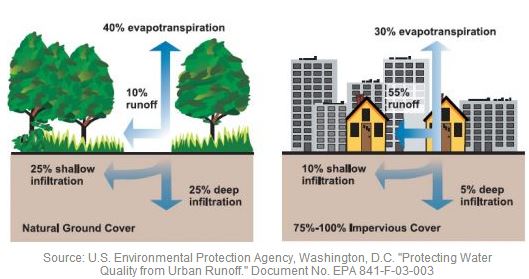
Stormwater management has become an increasingly important responsibility for local governments. Here in Peach county stormwater runoff is managed by collecting it in stormwater systems using different collection structures. The water is then redirected and eventually released into local bodies of water including streams, ponds, creeks, and rivers.
New federal and state regulations require a new approach to stormwater management. These new regulations require counties to more stringently manage stormwater runoff. These regulations are aimed at minimizing flooding and enhancing water quality. For every rain event the county’s water resources are threatened by stormwater runoff. Stormwater runoff is defined as “the portion of precipitation on land that cannot be adsorbed by the soil and ultimately reaches streams and other bodies of water, often containing dissolved or suspended materials.”
Polluted runoff is the leading sources of surface water pollution in present day America, as stated by the EPA. Stormwater is capable of picking up trash, dirt, leaves, sediment, pesticides, fertilizers, oil, grease, chemicals, pet waste, and other contaminants as it runs off of developed land. This polluted runoff is referred to as “non-point source pollution” because the pollution comes from many different sources as opposed to “point source pollution” that would result from a single spill or illegal discharge.
Stormwater runoff eventually flows into stormwater systems and is released into nearby rivers, streams, and wetlands. This runoff is released untreated into bodies of water used for swimming, fishing, and drinking. Urban growth increases the need for effective stormwater management due to the fact that land development alters the natural landscape and flow of surface water. These changes increase the amount and speed of stormwater runoff. This is due to an increase in the amount of impervious surfaces associated with urbanization. Flooding, erosion, and the discharge of pollutants are also made more sever by urbanization.
The Georgia Environmental Protection Division (EPD) regulates the discharge of pollutants in stormwater through National Pollutant Discharge Elimination System (NPDES) permits and the requirements of the Metropolitan North Georgia Water Planning District. Communities that fail to comply with stormwater requirements could face significant monetary penalties.
The Peach County Stormwater Management Program (PCSWMP) has been formulated to manage and regulate stormwater issues within the unincorporated areas of the County. To implement the Stormwater Management Program (SWMP), Peach County will undertake various activities, including the cleaning of ditches and other stormwater conveyance systems.
The program will also implement a more proactive approach replacing aging and failing culverts and drainage structures to increase conveyance capacity. In addition, an ongoing regulatory compliance strategy will be applied as well as an increase in development regulation activities.
The goals of the PCSWMP include:
- Achieve Compliance with Local, State, and Federal Regulations
- Public Education and Outreach
- Public Participation and Involvement with Reducing or Preventing Stormwater Pollution
- Detecting and Eliminating Illicit Discharges to the County’s Stormwater Drainage System
- Reducing Pollutants in Stormwater Runoff from Construction Activities
- Regulating Stormwater Runoff from New Development or Redevelopment
- Reducing and Preventing Stormwater Pollution from County Operations and Facilities
- Routine Inspections of Stormwater Drainage System
- Drainage System Cleaning / Repair / Replacement
- Service Request Investigations / Resolutions
- Drainage System Water Quality Improvements
- Stormwater Planning and Mapping
- Ordinance Implementation
- Land Development Plan Reviews and Site Inspections
Environmental Links
The Peach County Storm Water Department has compiled a list of informational links:
- Code of Federal Regulations
- Official Code of Georgia
- Federal Law for National Pollutant Discharge Elimination System (NPDES) permits
- Environmental Protection Agency (EPA)
- Georgia Environmental Protection Division (EPD)
- Georgia Environmental Protection Division (EPD) Contacts
- Metropolitan North Georgia Water Planning District (MNGWPD)
- Georgia Department of Natural Resources (DNR)
- Georgia Soil and Water Conservation Commission (GSWCC)
- Georgia Stormwater Management Manual (GSMM or Blue Book)
- Keep Georgia Beautiful
- Keep America Beautiful
- Protect Our Water
- Field Guide for Determining the Presence of State Waters that Require a Buffer Brochure
- Federal Emergency Management Agency (FEMA)
- Georgia Department of Transportation (GDOT)
StormwaterProjects:
- Peach County is responsible for the design and construction of numerous stormwater projects each year to improve drainage on and around public roadways. Projects include installing or upgrading county-owned drainage pipes, pump stations, drainage structures, pre-treatment retention ponds, and more. The County also develops watershed master plans to gather valuable information to help solve flooding issues.
- Motor Oil Disposal Decals
- This program involves installing “Used Motor Oil Decals” on each residential garbage container (approximately 4,000) used in the unincorporated areas of Peach County. Each decal will instruct the individual on used motor oil disposal procedures and will contain the address, phone number of the Peach County Recycling Facility, and URL for the County’s Stormwater Web Site.
- Dry Weather Screening
- The County screens dry weather discharges in the Municipal Separate Storm Sewer Systems (MS4s) within the urbanized areas of the County. The County screens 100 percent of its outfalls within the urbanized area on an annual basis. Updates to the outfall maps will also be made annually to identify outfalls from the (MS4s) to waters of the State, which is consistent with the definition of an outfall from the general permit. If there is dry weather flow and if detected water quality limits are above their acceptable baseline limits as outlined in the Metropolitan North Georgia Water Planning District’s dry weather screening standards as outlined in Standards and Methodologies for Surface Water Quality Monitoring, the County will initiate the Source Tracing and Removal Procedures.
- MS4 Inspection Program
- To ensure long-term functionality of the County’s drainage infrastructure, an MS4 inspection and maintenance program has been implemented for the urbanized areas of the County that utilizes the EPD approved inspection procedure/checklist. MS4 elements for inspection include storm sewer lines, catch basins, culverts, and drainage ditches. These inspections will include examinations for both structural and water quality concerns.
- From these inspections, proactive maintenance and system cleaning will be performed on an as needed basis as funds are available to ensure functional operation of the drainage system during future storm events. The County will conduct these inspections on a periodic basis such that routine maintenance can be performed on major drainage systems thereby reducing the potential for significant drainage system failures. Maintenance activities will include infrastructure and repair and abatement of erosion. All debris and litter removed will be disposed of at a local landfill.
Peach County Phase II MS4 SWMP revised 032825
State and Federal Requirements
What is the Clean Water Act?
The Clean Water Act (CWA) is a law enacted by Congress and signed by the President that established environmental programs, including the National Pollutant Discharge Elimination System (NPDES) permit program, to protect the Nation’s waters from pollutants and directs the U.S. Environmental Protection Agency (EPA) to develop, implement, and enforce regulations consistent with this law.
The 1972 amendments to the Federal Water Pollution Control Act, known as the CWA, provide the basic structure for regulating the discharge of pollutants from point sources to waters of the United States.Under the CWA, the EPA has implemented pollution control programs and set water quality standards for all contaminants in surface waters.
The CWA requires anyone that wants to discharge pollutants to first obtain an NPDES permit, or else that discharge will be considered illegal. Section 402 of the CWA specifically required the EPA to develop and implement the NPDES program.The CWA allowed EPA to authorize the NPDES Permit Program to state governments, enabling states to perform many of the permitting, administrative, and enforcement aspects of the program.
What is National Pollutant Discharge Elimination System permit?
As a result of the Clean Water Act the nation’s waters have drastically improved. Despite the improvement impaired waters are still a big issue. Around 40 percent of the nation’s bodies of water are still considered impaired and do not meet water quality standards.
Polluted stormwater runoff is one of the leading contributors to water pollution. Polluted runoff is usually discharged untreated into local bodies of water. This pollution can be detrimental to aquatic environments, wildlife, and public health. Contaminated drinking water supplies and recreational waterways have a direct impact on local communities.
Mandated by Congress, under the CWA, the National Pollutant Discharge Elimination System (NPDES) Stormwater Program is a comprehensive two-phased national program for addressing the non-agricultural sources of stormwater discharges which adversely affect the quality of our nation’s waters. The NPDES program requires that local governments implement a certain set of controls designed to prevent stormwater runoff pollutants from entering local waters such as streams, rivers, lakes or coastal waters. Here in GA the NPDES consist of three general permits that apply to different types of municipal, construction, and industrial activities.
These permits require that regulated parties submit a Notice of Intent (NOI) for the stormwater management program (SWMP) that is to be implemented to prevent the discharge of pollutants into the local environment. These measures are referred to as Best Management Practices or BMPs. As a Municipal Separate Storm Sewer System (MS4) all of the NPDES permit requirements must be met to discharge stormwater. Peach County is classified as a Small Phase II MS4.
What are Peach County’s Requirements as a Permitted Small Phase II MS4?
A regulated Small Phase II MS4 operator must develop, implement and enforce a stormwater management program designed to reduce the discharge of pollutants from their MS4 to the “maximum extent practicable,” to protect water quality requirements of the Clean Water Act.The stormwater management program must include the following six minimum control measures:
1. Public Education and Outreach
Implement BMPs to inform public about ways to reduce stormwater pollution.
2. Public Participation and Involvement
Implement BMPs to involve the public in the implementation and maintenance of an MS4’s stormwater management program.
3. Illicit Discharge Detection and Elimination
Implement BMPs for identifying and eliminating illicit discharges to storm drain systems.
4. Construction Site Runoff Control
Implement BMPs for construction site operators to address stormwater runoff from construction sites.
5. Post-Construction Runoff Control
Implement BMPs for developers and owners to address stormwater runoff after construction is completed.
6. Pollution Prevention and Good Housekeeping
Implement BMPs for MS4s to address stormwater runoff from their own facilities and infrastructure.
The regulated MS4 must identify its selection of Best Management Practices (BMPs) and measurable goals for each minimum control measure in the permit application.Evaluation of BMPs and measurable goals must be included in annual report to the Georgia EPD.Operators of regulated MS4s must fully implement their SWMP by the end of the first permit period, which is typically 5 years.